
BC Following Distance: How Much Space Is Enough?
A BC learner-driver guide to following distance and space margins: use at least a two-second gap in good conditions, add time when risk rises, and leave room before changing lanes.
Updated:
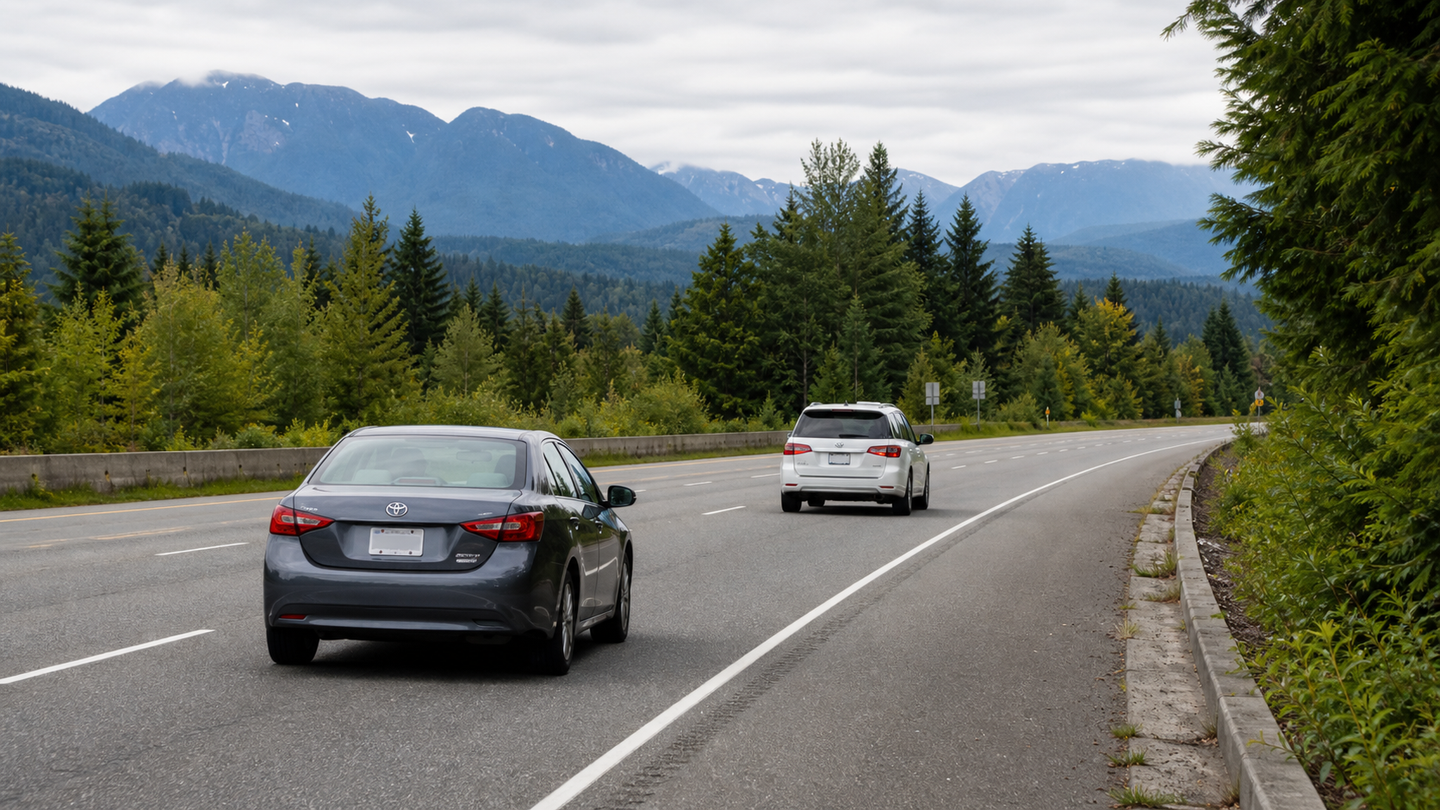
In British Columbia, a learner driver should keep at least a two-second following distance in good conditions, then add more time behind large vehicles, motorcycles, heavy traffic, bad weather, poor visibility, hills, or anything that reduces stopping room.
Count space as time, not car lengths
Car lengths are hard to judge because speed changes the distance you travel every second. A time gap works better: when the vehicle ahead passes a fixed point, start counting. If you reach that point before at least two seconds have passed in good conditions, you are too close for a calm stop.
Add space when conditions are not ideal
The two-second gap is a starting point for clear weather, dry pavement, and normal visibility. Add more time when rain, darkness, glare, snow, hills, heavy traffic, construction, or an unfamiliar road gives you less warning. Extra space is not wasted space; it is decision time.
Leave more room behind certain vehicles
Large vehicles can block your view, motorcycles may stop quickly, and buses or trucks may need extra space before a turn or stop. Following too closely makes you react to brake lights instead of the full traffic picture. A better gap lets you see past the vehicle ahead and plan earlier.
Protect the gap during lane changes
Before you move over, check mirrors, signal, shoulder check, and make sure the lane has enough room for your vehicle without crowding the driver behind or cutting off the driver ahead. After changing lanes, rebuild your following distance instead of staying tucked close to the next bumper.
Quick answers
Is two seconds always enough following distance in BC?
No. Two seconds is a useful minimum in good conditions. Add more space when the road is wet, visibility is poor, traffic is heavy, you are behind a large vehicle or motorcycle, or you need more time to stop smoothly.
How do I test my following distance while driving?
Pick a fixed point such as a sign or shadow. When the vehicle ahead passes it, count steadily. If you reach the same point before your chosen time gap is complete, ease off and rebuild space.