
How Should a BC Learner Scan for Wildlife Beside the Road?
A practical BC Class 7 guide to scanning ditches and shoulders, managing speed at dawn or dusk, and responding calmly when wildlife may enter the road.
Updated:
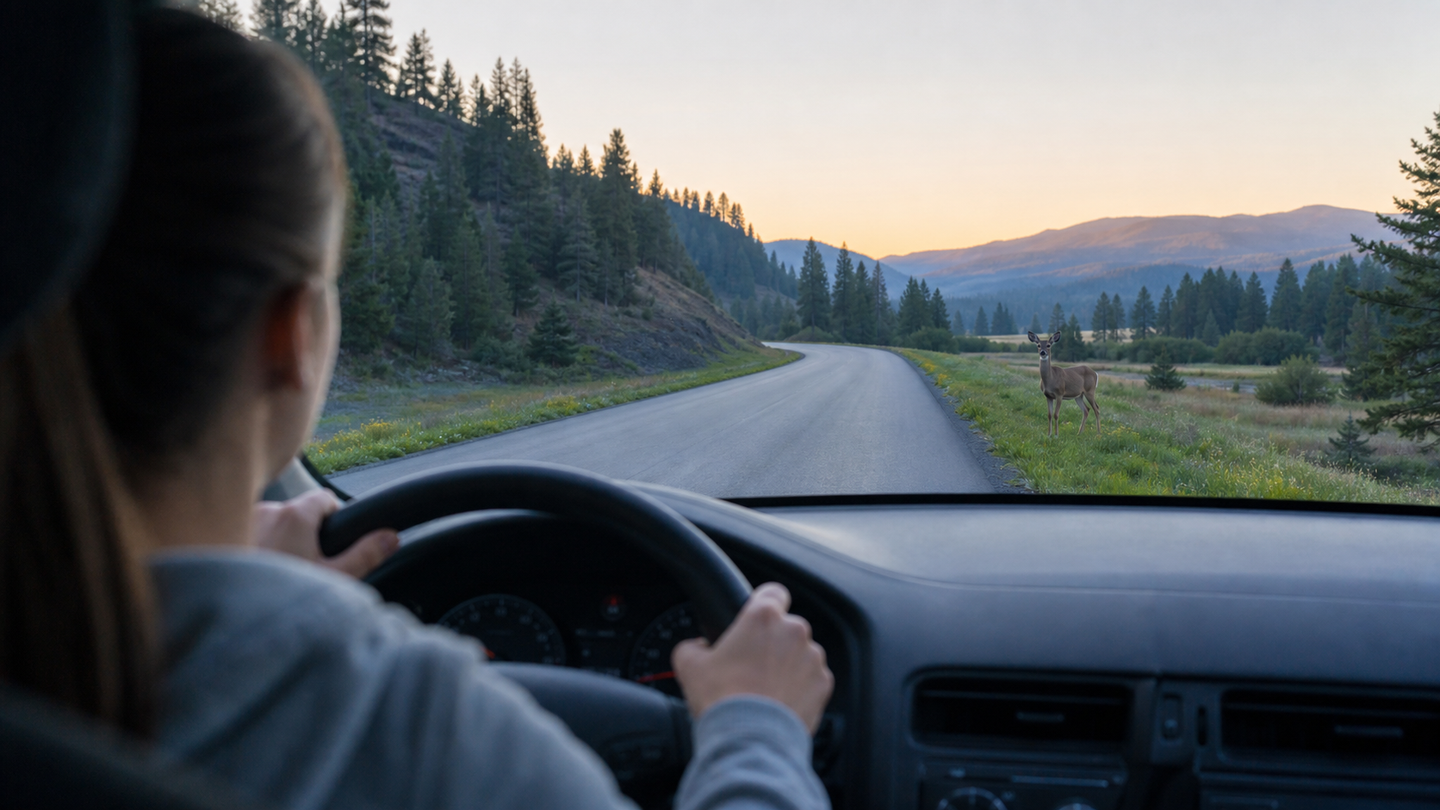
On British Columbia roads, learner drivers should scan the ditch, shoulder, and tree line, reduce speed before visibility becomes limited, and prepare to stop smoothly if wildlife moves toward the roadway.
Scan beyond the lane
Do not focus only on the pavement directly ahead. Move your eyes between the road, ditch, shoulder, openings in vegetation, and the edges of fields, looking for movement or reflected eyes before an animal reaches your path.
Manage speed before the surprise
Wildlife can be harder to detect around dawn, dusk, curves, and long rural stretches. Ease off the accelerator early when the view is limited so you gain time to brake progressively instead of making a sudden steering move.
Respond calmly and rebuild space
If an animal is near the road, cover the brake, increase following distance, and watch what traffic ahead is doing. Avoid becoming fixed on the animal alone; continue checking the lane, mirrors, oncoming traffic, and the safe space around your vehicle.
ICBC knowledge-test takeaway
The strongest exam answer is usually the one that detects the hazard early and reduces speed before an emergency develops. A Class 7 learner should create time, maintain control, and avoid a last-second reaction that introduces another conflict.
Quick answers
Where should I look for wildlife while driving in BC?
Scan the lane as well as ditches, shoulders, field edges, creek areas, and gaps in roadside vegetation. Look for movement and changing reflections, especially when visibility is reduced.
What should I do when I see an animal near the road?
Reduce speed smoothly, cover the brake, increase space around your vehicle, and keep scanning the full traffic scene. Be prepared to stop without making an abrupt, uncontrolled move.