
Is your car's emergency bag ready for a BC trip?
Check the supplies you would need during an unexpected delay, and make sure they are usable, accessible and secured before departure.
Updated:
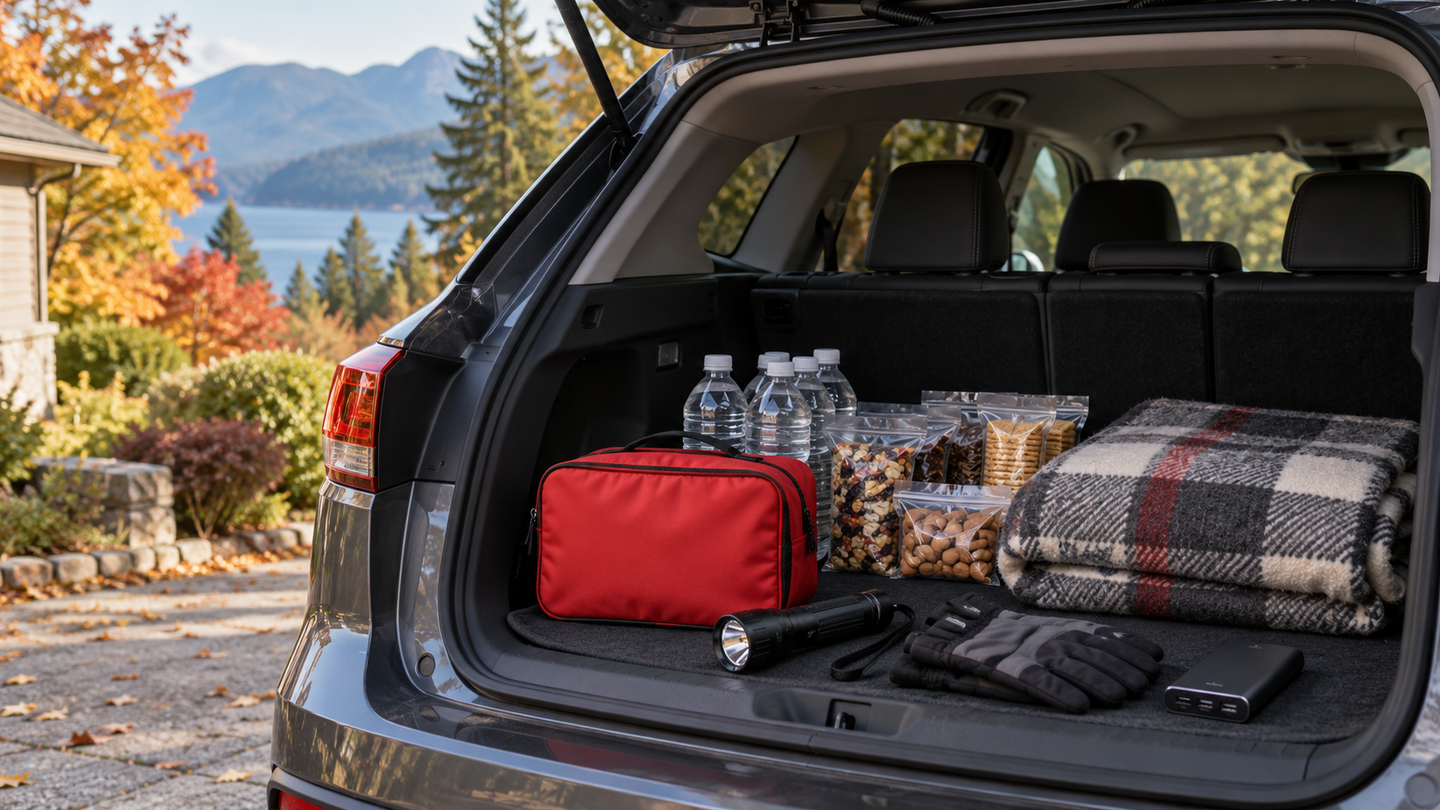
PreparedBC recommends emergency preparation, including a vehicle grab-and-go bag. For British Columbia practice trips, check supplies alongside the route and weather.
Plan for the delay you did not book
A short practice outing can last longer if traffic stops or a route closes. Before leaving with your supervisor, ask what everyone would need while waiting. Use PreparedBC's checklist to review water, food, a flashlight, first-aid supplies, warm clothing and essential personal items. Adjust the bag to the travellers rather than treating a purchased kit as automatically complete.
Check condition and storage
Open the bag before the trip: test the light, check expiry dates and review how medicines or batteries must be stored. A charging cable is not a power source when the phone and vehicle cannot supply it. Keep supplies secured so they cannot roll near pedals or move around the cabin. Decide where useful items can be reached after a safe stop without unloading everything beside traffic.
Supplies support a safer plan
An emergency bag is not permission to enter a closed road or drive beyond your ability. Check the route and weather as well. Discuss how to contact help and share the travel plan before leaving; mobile coverage may be limited. For ICBC Class 7 practice, name one missing or expired item and explain how you would fix it before departure. Make a real check, not just a memory of owning a kit.
Quick answers
Is a store-bought emergency kit enough by itself?
Not necessarily. Inspect it and add what the actual travellers need; check that supplies and equipment remain usable.
Does carrying supplies make a hazardous route suitable?
No. Route, weather, vehicle readiness and driver ability still govern whether to go. Supplies are a backup, not a reason to take risks.