BC Uncontrolled Intersections: Who Goes First?
A BC learner-driver guide to uncontrolled intersections: slow down, scan left to right, yield to earlier arrivals, and use the driver-on-the-right rule when arrivals are simultaneous.
Updated:
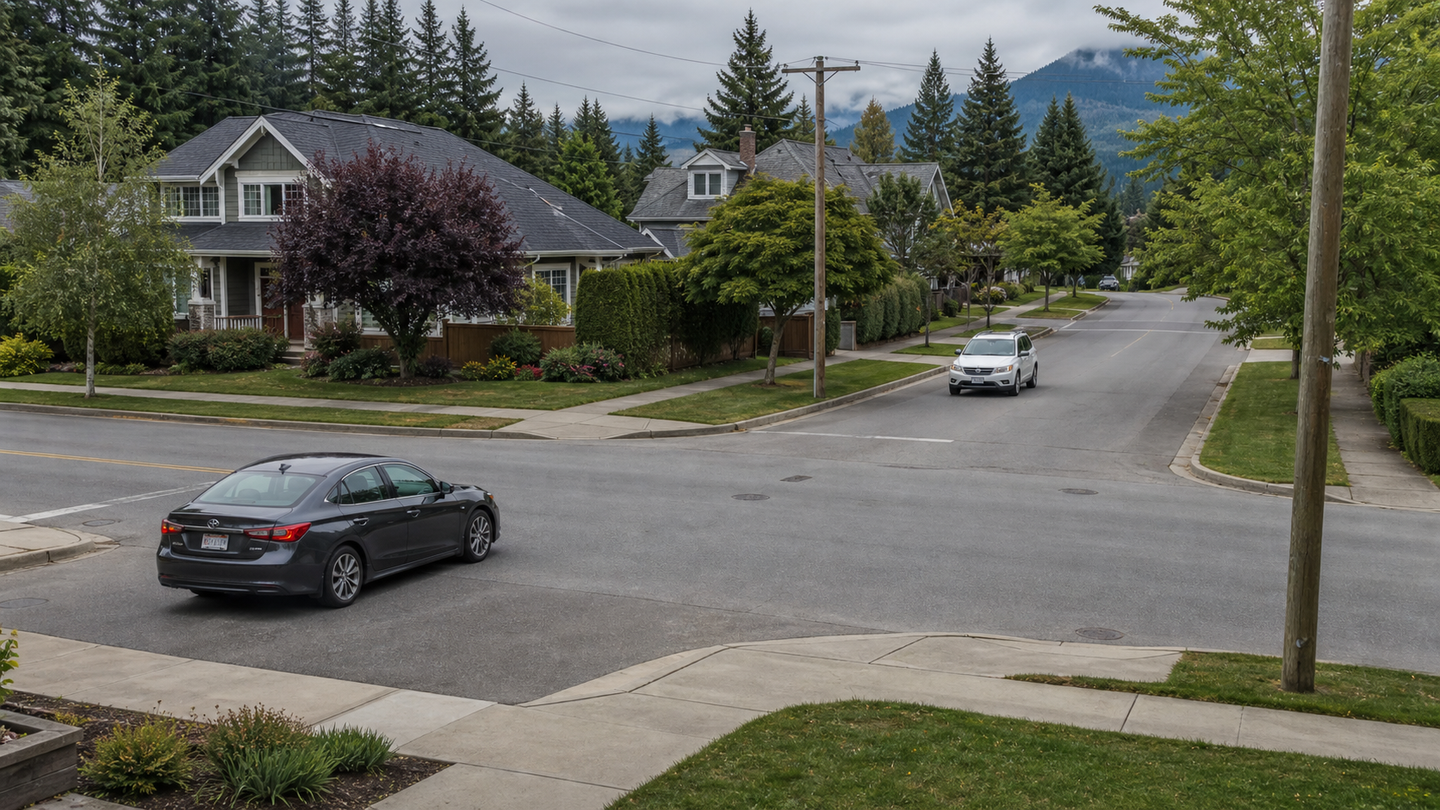
In British Columbia, an uncontrolled intersection has no signs or traffic lights. Approach slowly, scan left to right, yield to road users already in or at the intersection, and when two vehicles arrive at the same time, the driver on the left yields to the driver on the right.
Recognize the no-sign intersection
An uncontrolled intersection may look quiet because there is no stop sign, yield sign, or traffic light telling each driver what to do. That quietness is exactly why it matters on the ICBC knowledge test: you must create time to see cross traffic, pedestrians, cyclists, driveways, parked vehicles, and any driver who may not expect you.
Slow before the decision point
Do not treat an uncontrolled intersection as a place to coast through at normal speed. Ease off early, cover the brake if visibility is limited, and scan from left to right before you enter. The useful habit is to decide before the shared space, not after your front bumper is already in it.
Yield to earlier arrivals
If another vehicle, cyclist, or pedestrian is already in the intersection or clearly arrived first, you should give them space to go. The exam idea is not about winning your turn; it is about avoiding conflict. If the other road user is uncertain, stay predictable and let the situation settle.
Same time means right side first
When two vehicles arrive at about the same time, the vehicle on the left yields to the vehicle on the right. That rule is easy to remember but still requires eye contact, speed control, and patience. If there is any doubt about timing or safety, yielding is the safer answer.
Quick answers
Does an uncontrolled intersection mean nobody has to yield?
No. It means there is no sign or light assigning the turn for you. Drivers still need to slow down, scan, yield to earlier arrivals, and use the right-side rule when arrivals happen at about the same time.
What should I do if I cannot see cross traffic clearly?
Slow more, be ready to stop, and move only when you can confirm the intersection is clear. Limited visibility is a reason to be more cautious, not a reason to guess.