
How should a BC Class 7 learner plan supervised practice?
Build a simple BC Class 7 supervised-practice plan that turns ICBC study, quiet-road practice, and road-test readiness into one repeatable routine.
Updated:
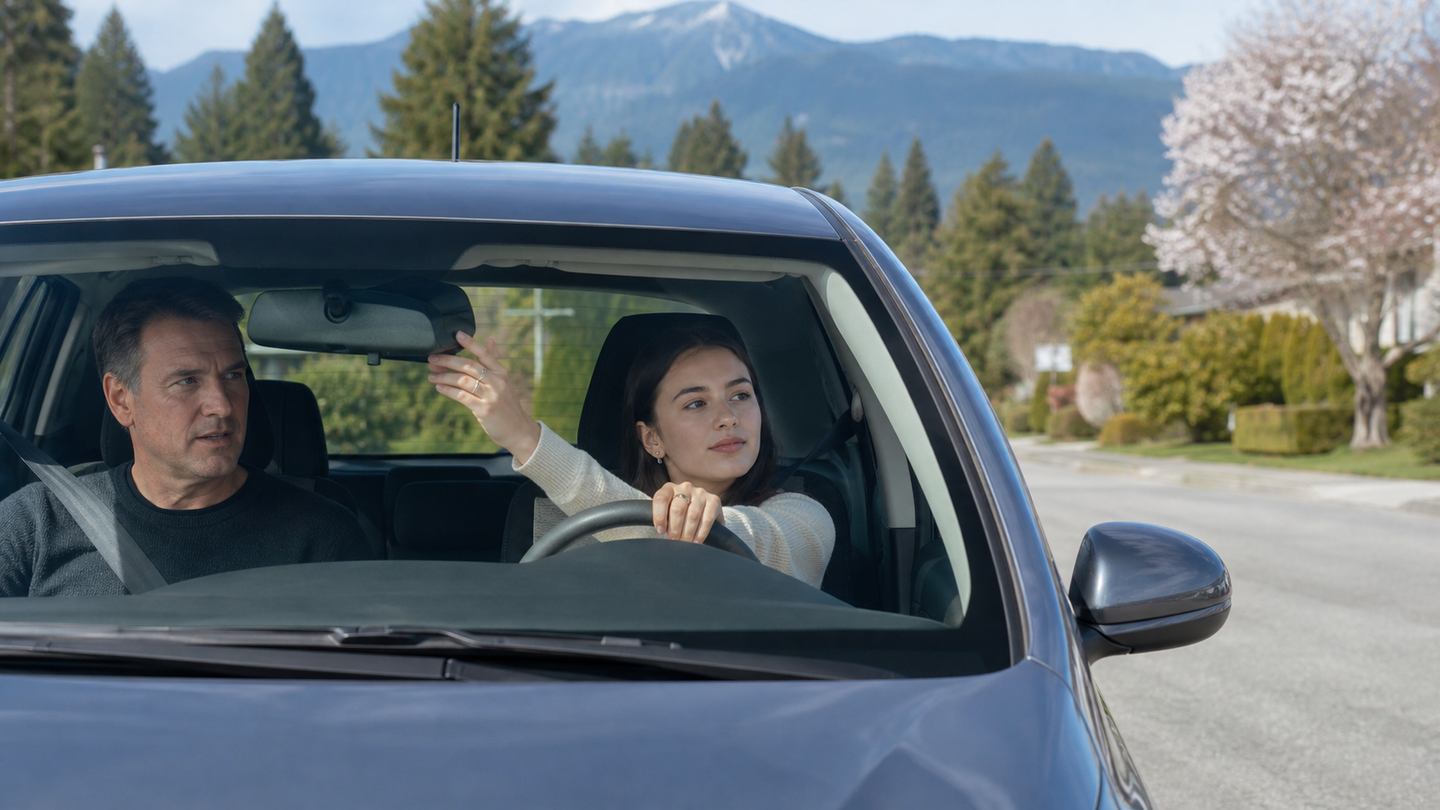
For BC Class 7 learners, supervised practice should begin on quiet streets, expand into busier routes, and connect every drive to ICBC habits such as observation, space margins, and calm vehicle control.
Start with one purpose per drive
A useful practice drive is not just time behind the wheel. Pick one main purpose before starting: smooth stops, mirror checks, shoulder checks, speed control, parking-lot observation, or calm left turns. The supervisor can then watch for that skill instead of giving constant comments. This keeps the learner focused and makes the review after the drive specific enough to improve the next attempt.
Move from easy roads to mixed situations
Begin where the learner can control the vehicle without feeling rushed, such as quiet residential streets or an empty parking area. Add busier roads only when steering, braking, lane position, and scanning feel stable. A BC learner should practise in daylight first, then add rain, hills, busier intersections, and parking manoeuvres in small steps. The point is not to chase difficult routes early; it is to build judgment that transfers to real traffic.
Review like an examiner would observe
After each drive, talk about what the learner saw, what they missed, and where they had enough space. Use neutral questions: did you check the mirror before slowing, did you scan the crosswalk area, and did you leave room if the driver ahead stopped? This style matches exam thinking better than memorizing a route, because the road test is looking for repeatable safe habits in changing traffic.
Quick answers
How many skills should a BC learner practise in one session?
One or two skills is usually enough for a focused session. If the learner is working on shoulder checks, do not also overload the drive with difficult parking, heavy traffic, and unfamiliar routes at the same time.
Should supervised practice copy the road-test route?
No. Familiar routes can help confidence, but the better goal is transferable judgment: scanning early, choosing safe gaps, controlling speed, and responding calmly when traffic changes.