
BC See-Think-Do: How to Scan Ahead for Hazards
A BC learner-driver guide to the ICBC See-Think-Do habit: look far ahead, identify possible hazards, choose a safe response, and keep space around your vehicle.
Updated:
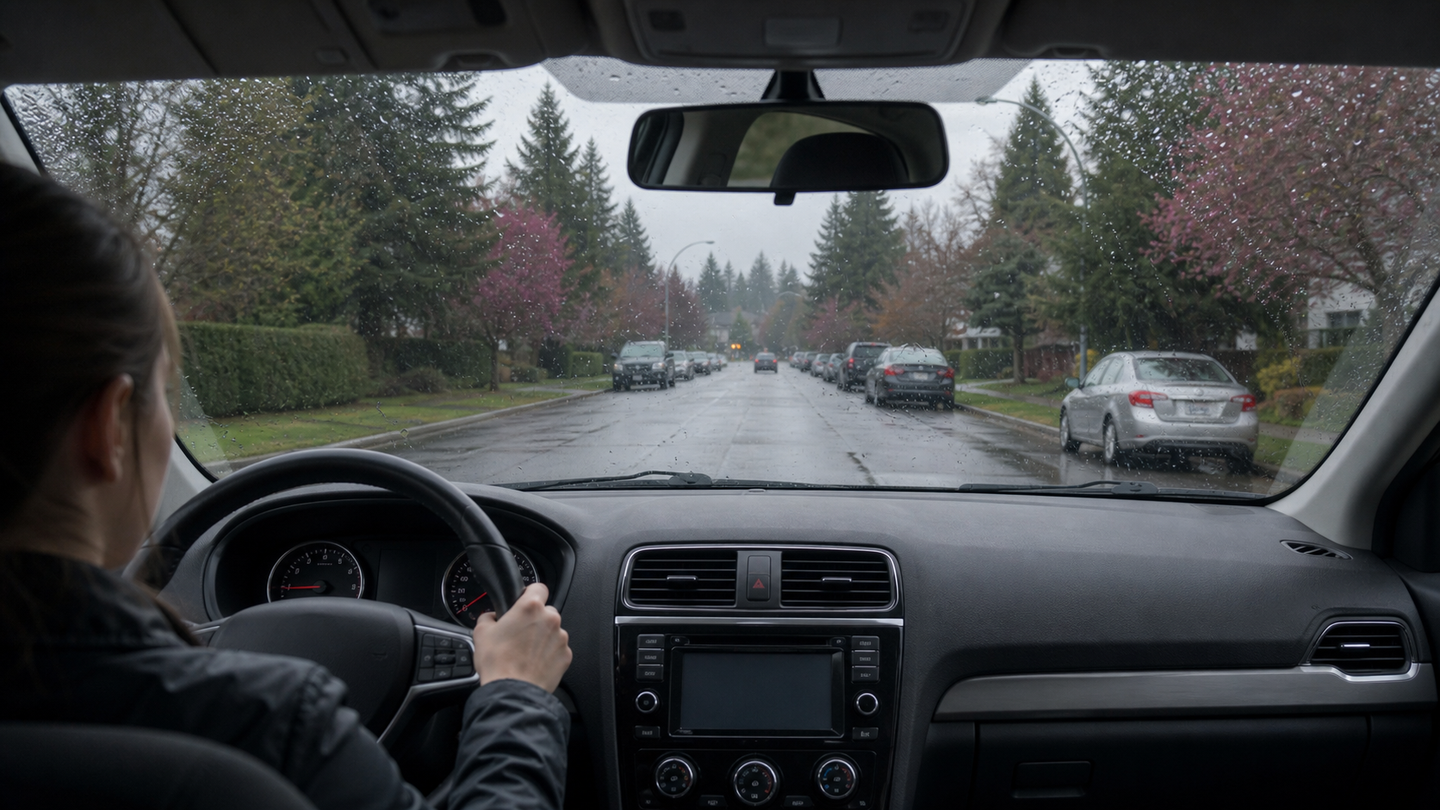
In British Columbia, ICBC learners are expected to observe early, think about possible hazards, and act smoothly. The habit is often described as See-Think-Do: scan far ahead, predict what could change, then adjust speed, space, or communication before you are forced into a sudden move.
See more than the car in front
Scanning ahead means looking beyond the nearest bumper. Check the road surface, parked vehicles, driveways, cyclists, pedestrians, mirrors, and your escape space. The goal is to notice a developing risk while there is still time to respond gently.
Think about what could change
After you see a clue, ask what it could become. A wet road can increase stopping distance, a parked car may open a door, and a child or cyclist can appear from a hidden area. This thinking step helps you avoid surprise instead of only reacting late.
Do one smooth safe action
Your action may be easing off the accelerator, creating more following distance, choosing a better lane position, covering the brake, or communicating with a signal when appropriate. Small early actions are usually safer and more comfortable than sharp last-second corrections.
Quick answers
What does See-Think-Do mean for a BC learner driver?
It means observe the road early, think about how the situation could develop, and then choose a safe action such as adjusting speed, space, or lane position before the risk becomes urgent.
Is hazard scanning part of the ICBC knowledge test mindset?
Yes. Many knowledge-test questions reward defensive thinking: look ahead, keep space, identify vulnerable road users, and choose the action that reduces risk rather than the action that only protects your right-of-way.