
How Should a BC Learner Drive Safely Through Curves?
A practical BC Class 7 guide to slowing before a curve, looking well ahead, steering smoothly, protecting lane space, and accelerating gently after the midpoint.
Updated:
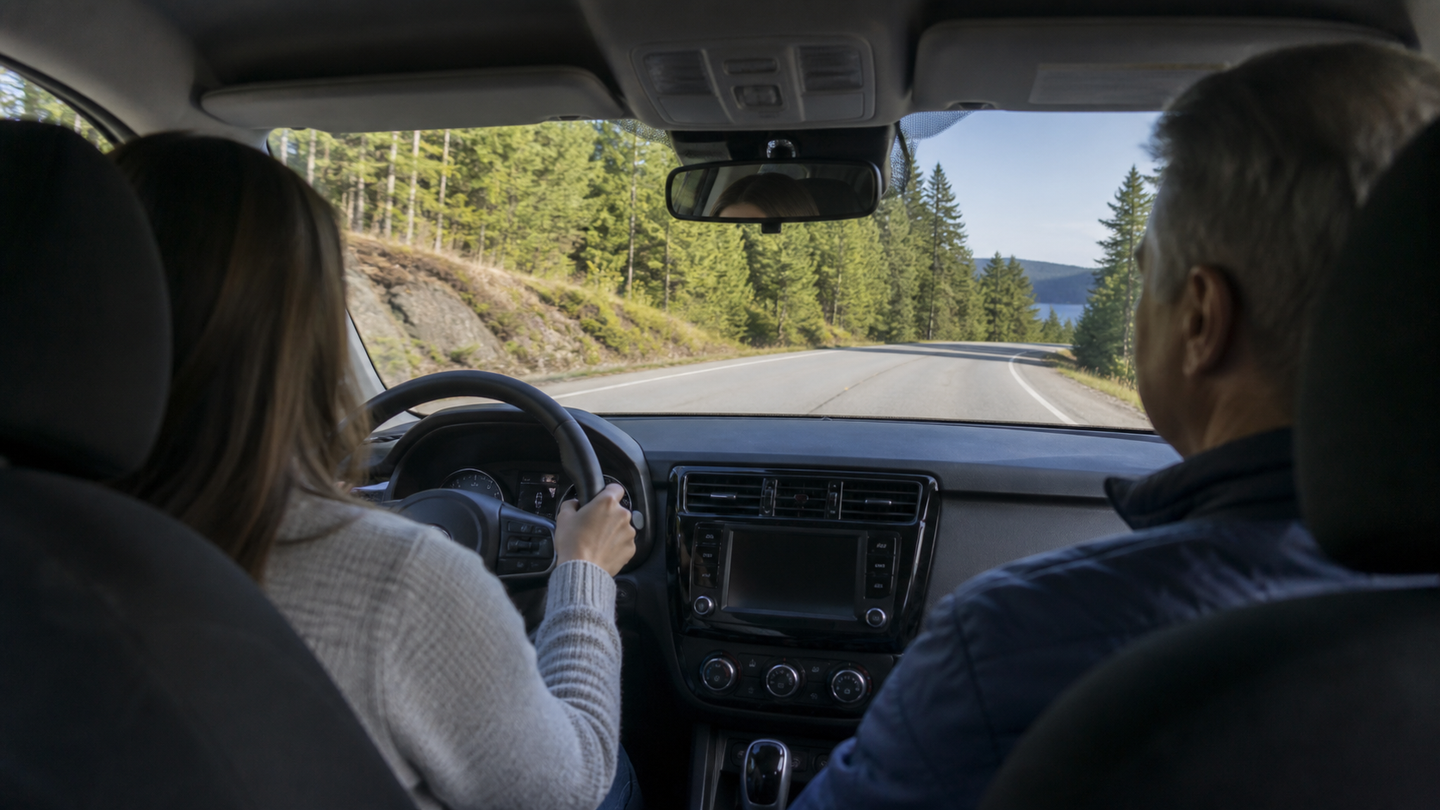
In British Columbia, a Class 7 learner should prepare before a curve: scan ahead, reduce speed while the vehicle is straight, steer smoothly through a stable lane position, and accelerate gently after the midpoint when the exit is visible.
Set your speed before the curve
Read the road as far ahead as visibility allows. Ease off the accelerator and complete normal braking before you begin the main steering movement. Entering at a manageable speed gives the tires and suspension more room to keep the vehicle balanced, and it avoids a rushed correction halfway through the bend.
Look through the bend, not at the road edge
Keep your eyes moving toward the part of the lane you want to reach. A learner who stares at the shoulder or the centre line often makes late, uneven steering corrections. Looking well ahead also helps you notice an approaching vehicle, a hidden driveway, a cyclist, debris, or a change in the curve early enough to respond smoothly.
Hold space with smooth steering
Stay centred in your lane and use a steady steering input instead of cutting toward the inside or drifting wide. Avoid routine braking in the curve; ICBC's practice checklist emphasizes slowing before the bend. If an unexpected hazard appears, keep control and respond safely rather than treating any practice rule as a reason to ignore the hazard.
Use the midpoint as a decision point
Imagine a dry forest road that bends right and briefly hides the exit. Slow while straight, look around the curve, and keep a stable position. Once you reach the middle and can see the lane opening, begin to accelerate gently toward normal speed. For an exam question, choose the answer that creates time, visibility, balance, and lane space before the curve.
Quick answers
Should a BC learner brake while already in a curve?
For ordinary speed adjustment, brake before entering while the vehicle is still straight. That makes the curve smoother and more stable. An unexpected hazard can still require a controlled response, so keep looking ahead and never sacrifice safety just to follow a memorized sequence.
Where should I look when the end of the curve is hidden?
Look as far through your lane as the road and sight lines permit, then keep updating your view as more of the curve appears. Do not lock your eyes on the shoulder, centre line, or the vehicle directly in front of you.