
BC Roundabout Rules: Yield, Signal, and Exit Safely
A BC learner-driver guide to roundabouts: slow down, yield before entering, choose the right lane, signal out, and watch pedestrians and cyclists.
Updated:
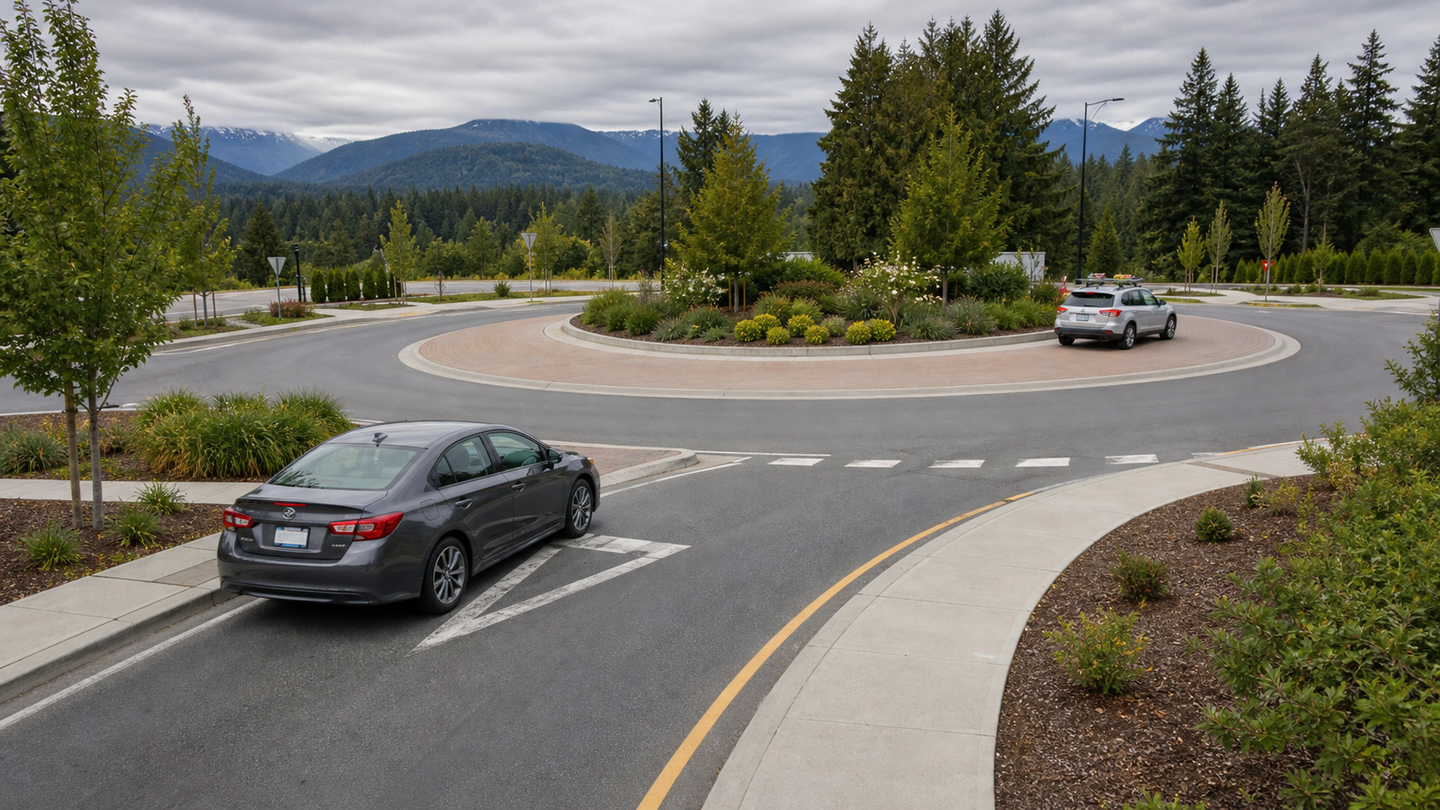
In British Columbia, roundabout driving starts before the circle: slow down, choose the correct lane, yield to vehicles already in the roundabout and to pedestrians or cyclists, then signal right before leaving.
Slow down before the yield line
A roundabout is not a four-way stop. Approach at a low speed, read the lane arrows and signs early, and be ready to yield before you enter. Stopping is only needed when traffic, pedestrians, cyclists, or posted control requires it.
Yield to traffic already in the circle
The key exam idea is simple: do not enter until there is a safe gap. Vehicles already circulating have priority over a vehicle waiting to enter. If another driver is unsure, protect space and avoid forcing your way into the roundabout.
Pick the lane that matches your exit
Use posted lane signs where they exist. As a general habit, use the right lane for a right turn or straight movement when allowed, and use the left lane for left turns or going around farther. Do not change lanes inside a small roundabout unless signs and space clearly allow it.
Signal right before you leave
A right signal tells waiting drivers and people outside the vehicle where you are going. Signal after passing the exit before yours, check for pedestrians and cyclists at the crosswalk, and leave smoothly without cutting across another lane.
Quick answers
Do I have to stop at every BC roundabout?
No. You slow down and yield before entering. You stop only when yielding is necessary because another road user, a pedestrian, a cyclist, or a traffic control makes it unsafe to continue.
When should I signal in a roundabout?
Signal right before your exit, usually after you pass the exit before the one you want. Keep the signal practical and clear so other road users can predict your movement.