
How should a BC learner use road-test feedback?
Turn BC road-test feedback into a calm Class 7 practice plan with repeatable observation, vehicle-control, and hazard-awareness goals.
Updated:
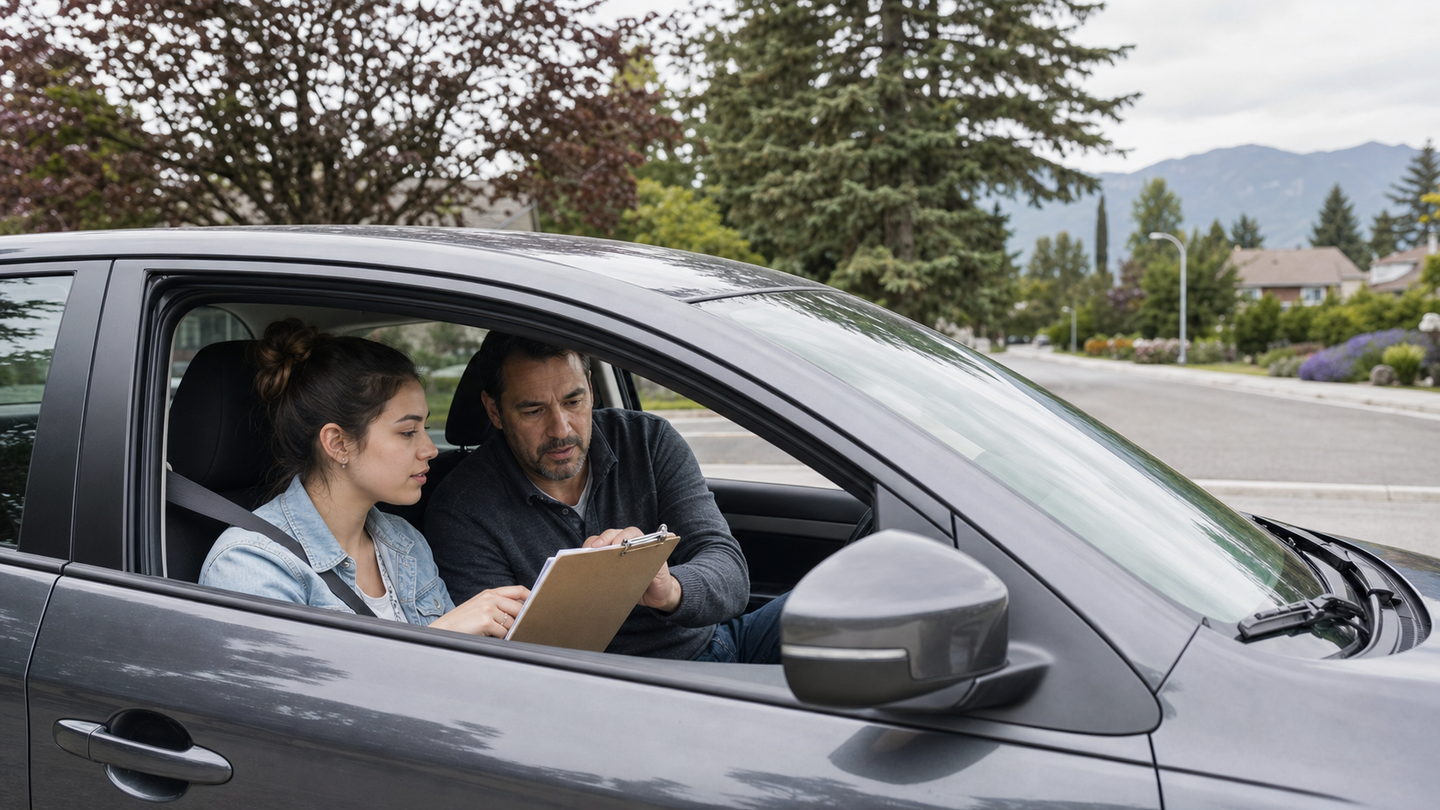
In BC, road-test feedback should become a short practice loop: identify the repeated habit, practise it in a lower-pressure setting, then bring it back into real traffic with a calm supervisor.
Separate the result from the next skill
A disappointing test result can feel personal, but the useful question is practical: which driving habit needs clearer proof next time? Group feedback into observation, vehicle control, space, speed, communication, or decision-making. If everything feels urgent, choose the issue that appeared more than once. A narrow target is easier to practise than a vague instruction to drive better.
Rebuild the habit before adding pressure
If the feedback involved scanning, start where there is time to look early and say what you see. If it involved speed control, practise smooth approach speed before busier turns. If it involved parking, break the manoeuvre into setup, observation, movement, and final position. The learner should feel the corrected habit at low pressure before trying it on a busier road or near the test area.
Make the supervisor a quiet observer
During the next practice drive, the supervisor should watch the chosen habit and keep notes instead of coaching every few seconds. After the drive, compare the learner's self-review with the supervisor's notes. This helps the learner build the same awareness they need on test day: noticing hazards, making decisions early, and correcting small errors before they become unsafe.
Quick answers
Should a learner book another road test right away?
Only if the weak habits are already understood and can be repeated safely. If the feedback points to observation, speed, or control problems, practise those first so the next test is not just a replay of the same issues.
What is the best first practice after road-test feedback?
Choose a low-pressure route and one target habit. For example, practise mirror checks before slowing, shoulder checks before lane position changes, or scanning both sides before turns, then review immediately afterward.