
BC Road Test Day Vehicle Check: What Class 7 Learners Should Do First
A practical ICBC road-test day checklist for BC Class 7 learners: documents, vehicle condition, lights, mirrors, and calm setup before the drive begins.
Updated:
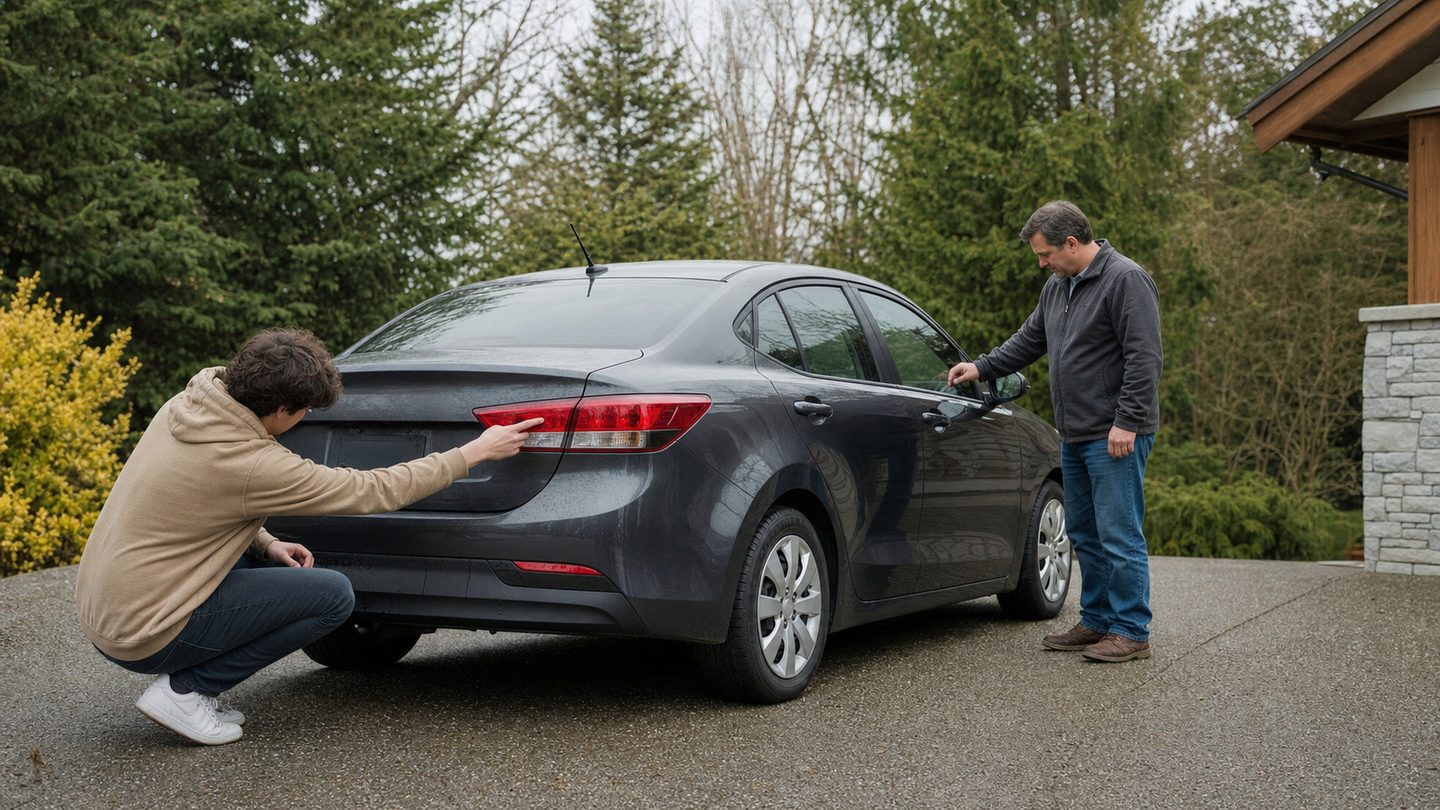
In British Columbia, Class 7 road-test readiness includes the appointment, documents, and a vehicle that lets the examiner assess driving safely and clearly.
Start with the appointment basics
Before you think about turns or parking, confirm the appointment time, location, and ID you need. Plan to arrive early enough that you are not rushing through parking, check-in, or last-minute questions. A calm start makes the first few minutes of driving easier.
Check the car like the test has already started
Walk around the vehicle and look for practical problems: lights that do not work, low tires, a blocked windshield, loose items, or mirrors that are not set. The examiner needs a vehicle that is safe enough for normal instructions, lane changes, stops, and parking tasks.
Set the driver's space before moving
Seat position, mirrors, seatbelt, head restraint, and clean windows all affect your observation. Take a moment to set them before shifting into gear. On the test, this shows that you treat preparation as part of safe driving, not as a separate chore.
Use the first block to show control
The first few minutes are often simple driving, but they show habits quickly. Move off smoothly, check mirrors, shoulder check when needed, signal early enough to be useful, and keep speed comfortable for the conditions. Do not let a small setup mistake become a bigger driving error.
Quick answers
Can my ICBC road test be delayed because of the car?
Yes, if the vehicle is not suitable for a safe test, the appointment may not go as planned. Avoid surprises by checking lights, tires, mirrors, windshield, registration and insurance context, and general cleanliness before leaving home.
What should a Class 7 learner focus on right before driving?
Focus on setup and observation: seat, mirrors, belt, windows, controls, and a calm scan around the vehicle. Once the car moves, keep your attention on safe space, signals, shoulder checks, and smooth decisions.