
BC railway crossings: is there room on the other side?
Learn why a moving queue does not guarantee a safe railway crossing. Check exit space before entering and watch for another train.
Updated:
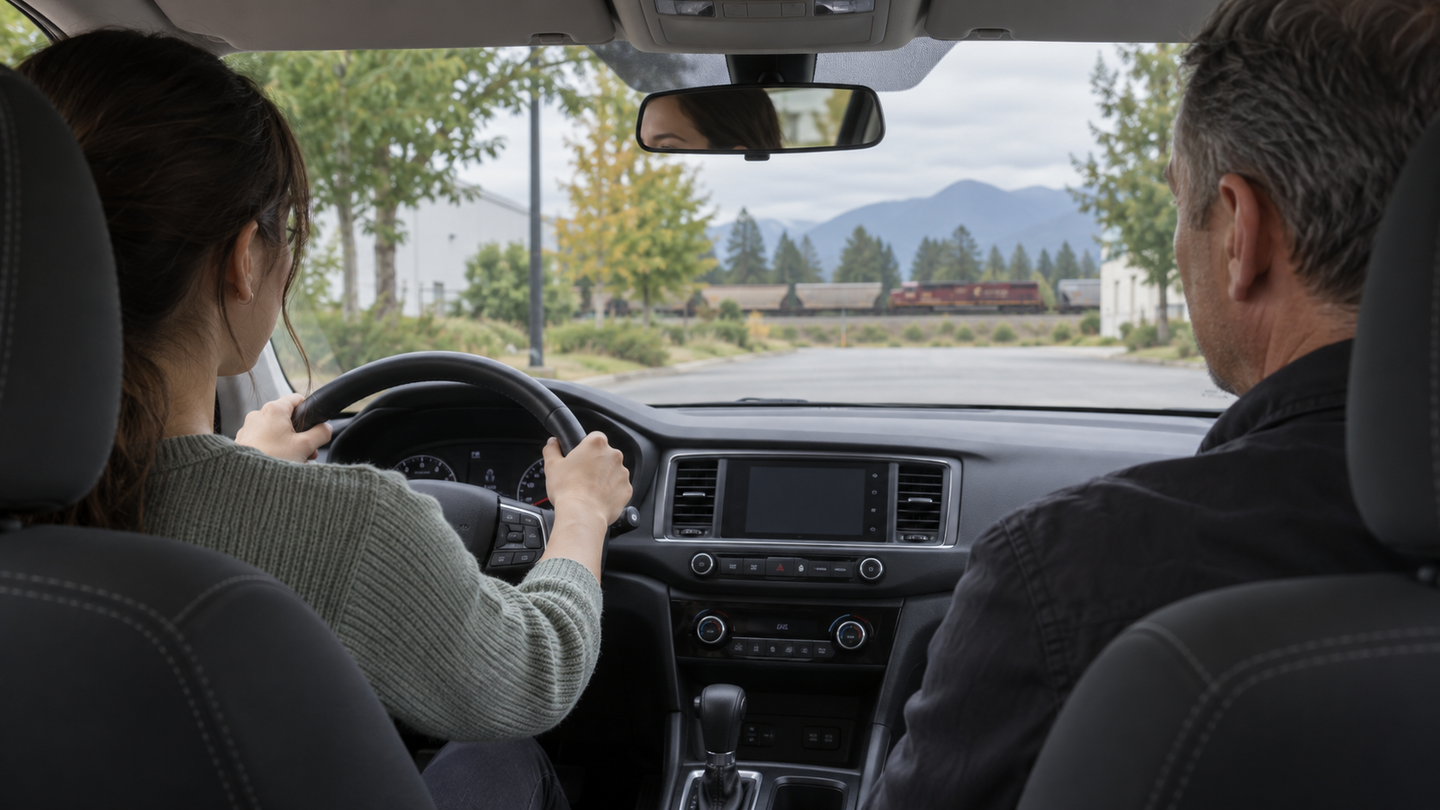
British Columbia Class 7 practice advice about exit space at railway crossings, based on official provincial rail-safety guidance.
Check the exit as well as the tracks
Before entering, make sure your entire vehicle can clear the crossing without stopping. Follow the crossing's warnings and controls. Open gates alone do not prove there is room beyond the tracks; never drive around lowered gates or try to beat a train.
Practice scenario: the queue starts moving
Traffic ahead moves one car length, then pauses. You cannot yet fit completely beyond the crossing. Stay clear of the tracks and wait for usable exit space instead of copying the car ahead. Discuss this imagined situation with your supervisor before practising; never create a queueing exercise on tracks.
Takeaway for an ICBC study question
Assess the whole path, including where you will finish. A departing train is not an instruction to move: another train may approach on a different track. Keep observing and obey the controls. If a vehicle stalls on the crossing, get everyone out and far away immediately, then call 911 for help.
Quick answers
Can I follow because the next car is moving?
Not unless you can clear the entire crossing safely. A moving queue can stop before there is space for your vehicle.
Does one passing train mean the crossing is clear?
No. Another train may approach on a different track. Keep watching and obey all crossing warnings and controls.