
BC Poor-Weather Driving: Visibility and Braking for Class 7 Learners
A practical BC Class 7 guide to driving in rain, fog, glare, and wet roads by slowing early, increasing space, and making decisions before visibility drops.
Updated:
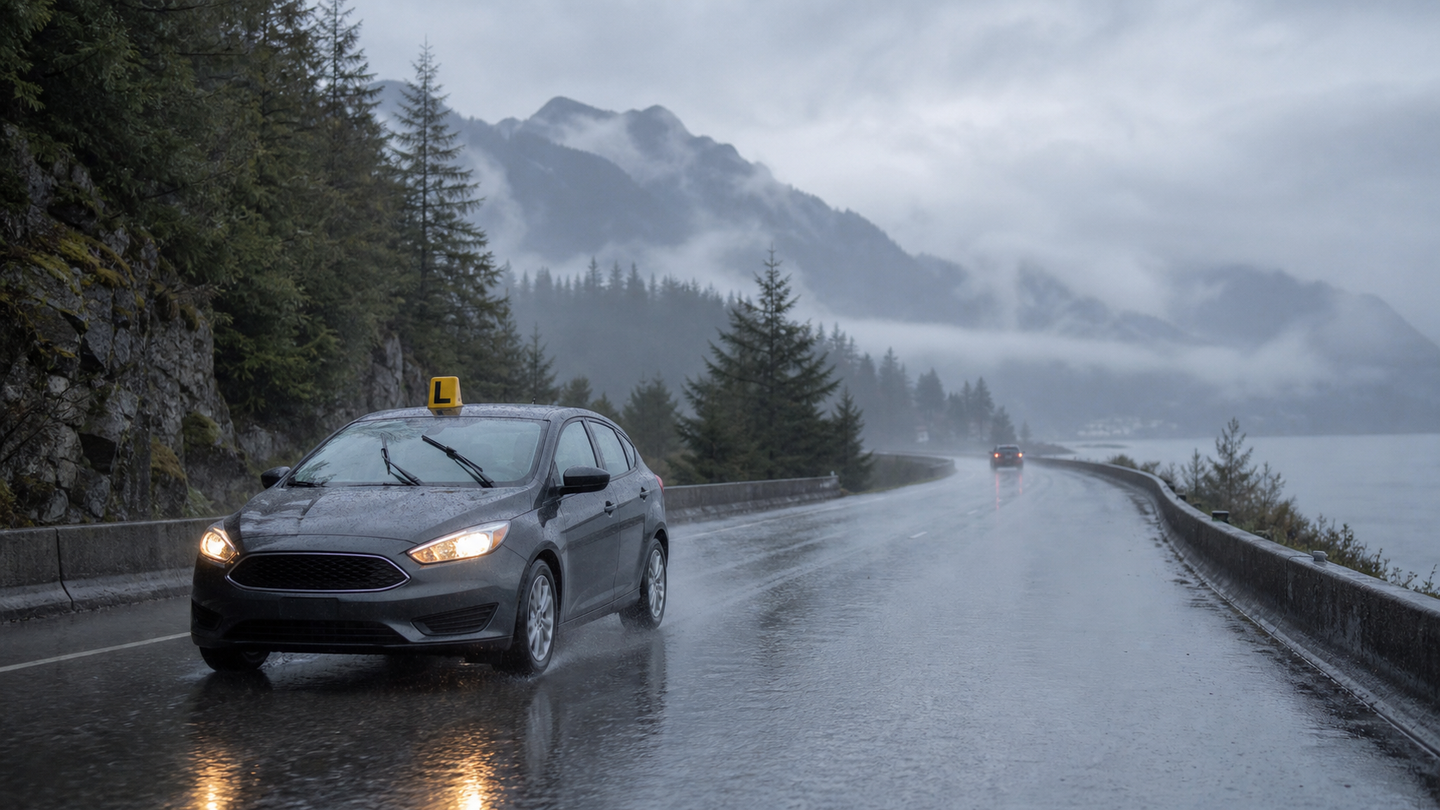
British Columbia learners often drive in rain, fog, spray, and low light. The Class 7 exam habit is to match speed and following distance to what you can actually see and stop for.
Drive for the view you have right now
In clear weather, you may see far enough to plan early. In rain or fog, that picture shrinks. A safe BC learner does not keep the same speed just because the road is familiar. Slow to the distance you can see, and leave enough room to stop without a hard last-second reaction.
Make the following gap bigger before you need it
Wet pavement, spray, and glare all reduce your margin. Increase following distance before traffic bunches up, not after brake lights surprise you. For the knowledge test, answers that protect space are usually stronger than answers that try to keep normal speed in poor conditions.
Keep visibility tools boring and ready
Headlights, wipers, defogging, clean windows, and mirrors are not small details in BC weather. They decide how early you notice a pedestrian, a stopped vehicle, or a lane change opening. If the windshield is fogging or mirrors are covered, solve that before adding a complex driving move.
Avoid unnecessary lane changes in low visibility
A lane change in rain or mist demands more checking because vehicles can disappear in spray or reflections. If your destination or turn is not urgent, stay predictable, signal early when you do need to move, shoulder check carefully, and wait for a gap that still looks safe after the weather is considered.
Quick answers
How much should I slow down in bad BC weather?
There is no single number that fits every road. Slow enough that you can see, decide, and stop within the clear distance ahead. If rain, fog, glare, or spray reduces your view, reduce speed and increase space.
What should I remember for the ICBC knowledge test?
Choose the answer that adapts to conditions: slower speed when visibility is poor, a bigger following gap on wet roads, clean windows and mirrors, and fewer rushed lane changes or sudden stops.