
Taking a pet in the car in BC: prepare before you drive
A pet moving around the cabin can compete with road observation. Plan restraint, supplies and stops before the trip starts.
Updated:
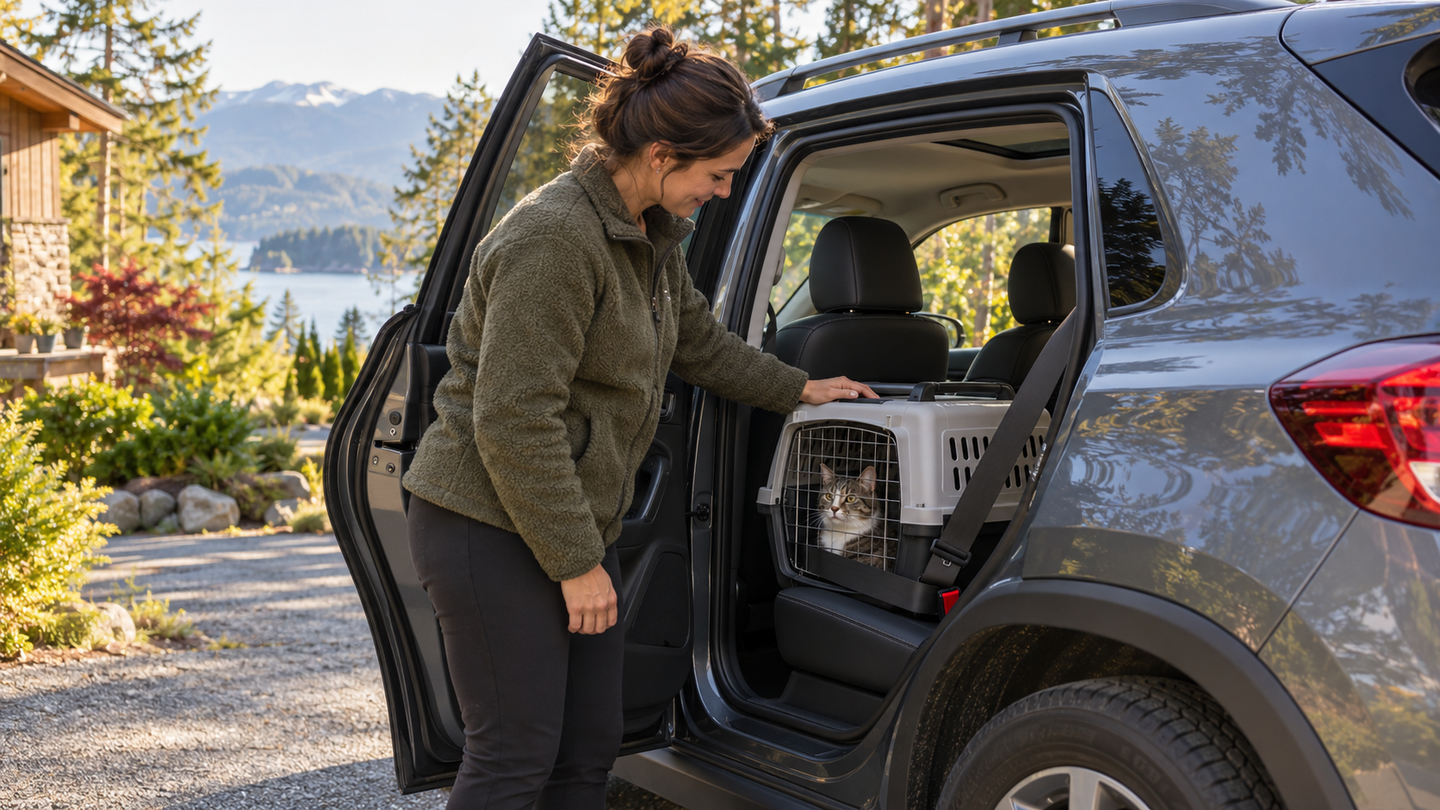
ICBC advises restraining pets and keeping them away from the front seat. British Columbia learners should plan pet care before departure so driving remains the priority.
A familiar pet can create an unfamiliar hazard
You are taking a cat to an appointment and assume a short trip needs little preparation. If it moves around the cabin, it can draw your eyes away or reach the driver's feet. Arrange an appropriate carrier or restraint before departure. ICBC recommends securing pets and keeping them in the rear seat or suitable rear cargo area rather than on a driver's lap or in the front seat.
Check the arrangement while parked
Follow the equipment and vehicle instructions for fit, positioning and securement. A loose carrier is not a secure solution just because the pet is inside it. Have supplies ready and check that the arrangement leaves the driver's view and controls unobstructed. The image here illustrates preparation, not a universal method for fitting a carrier. If the setup is unfamiliar, resolve it before the journey.
Keep pet care separate from driving
If the pet becomes unsettled, do not reach behind you, feed it or take a photo while driving. Find a safe parking place before responding. Plan breaks for a longer journey and avoid adding a pet-care task to an already demanding first practice route. For ICBC Class 7 study, explain how advance preparation removes a distraction instead of asking the driver to manage two tasks at once.
Quick answers
Can a calm pet ride on the driver's lap for a short trip?
Do not use your lap as its travel space. Set up an appropriate secure restraint or carrier before departure, even for a short journey.
Is a closed carrier enough if it can slide around?
No. Secure it according to the carrier and vehicle instructions so the carrier itself cannot become a moving hazard.