
BC Pedestrian Scanning Before Turns: A Class 7 Learner Guide
A practical BC Class 7 guide to spotting pedestrians before turns, driveway exits, and neighborhood crossings without treating the knowledge test like memorized signs.
Updated:
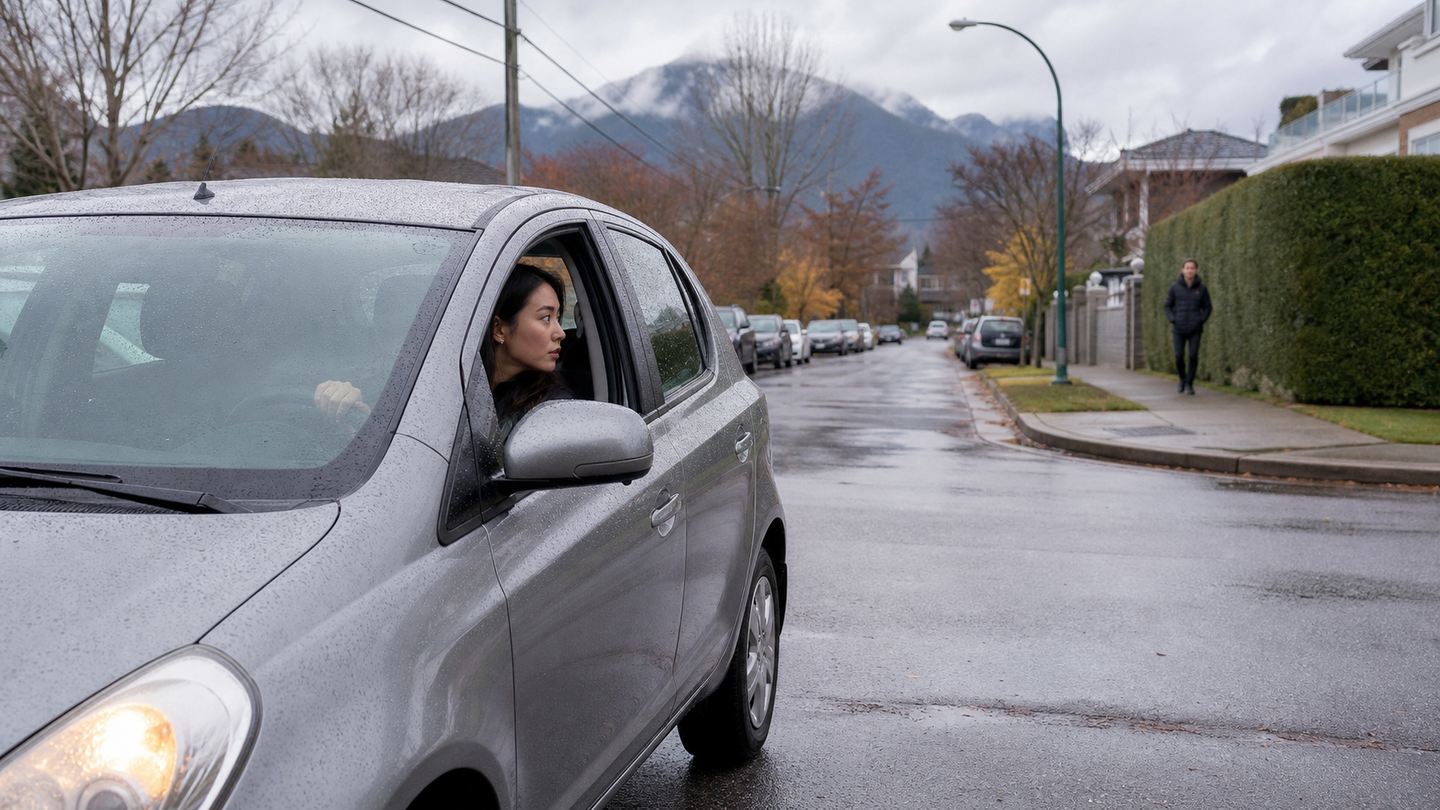
In British Columbia, Class 7 learners meet pedestrians at intersections, driveways, parking lots, and rainy residential streets. The exam habit is to slow, scan, and avoid turning until the path is clearly safe.
Slow enough to see people, not just traffic
A pedestrian hazard is often small compared with cars around you: a person near a curb, someone partly hidden by a parked vehicle, or a walker on a wet sidewalk. Before a turn, reduce speed so your eyes can check both the vehicle gap and the human activity near the edge of the road.
Scan the sidewalk path before the steering move
Do not wait until the car is already turning to look for pedestrians. Check mirrors, look ahead, scan the sidewalk and curb line, then look through the space where the car will travel. This makes your turn feel slower, but it prevents the common learner error of steering first and noticing people late.
Treat driveways and parking lots like conflict points
Many pedestrian conflicts happen away from big intersections. When leaving a driveway, alley, gas station, or parking stall, pause long enough to check both directions on the sidewalk and behind the vehicle. The correct exam choice is usually the one that creates more time and keeps the pedestrian path clear.
Use rain, darkness, and parked cars as warning clues
BC learners often practise in rain, glare, and low light. These conditions make a pedestrian harder to pick out, especially near dark clothing or between parked cars. If your view is blocked or reflections are strong, creep slowly, stop if needed, and rebuild your view before committing to the turn.
Quick answers
What should I check before turning near pedestrians in BC?
Check mirrors, your shoulder area, the sidewalk, the curb line, and the space your vehicle will enter. The key habit is to slow before the turn so you can scan for people as well as vehicles.
How does this show up on the ICBC knowledge test?
Expect answers that reward caution, visibility, and yielding time. If a pedestrian might be hidden or close to the path of travel, the safer answer is to slow, stop if necessary, and turn only when the path is clear.