
BC Four-Way Stop Rules: Who Goes First?
A clear learner-driver guide to four-way stop right-of-way in British Columbia: first arrival, yield to the right, left turns, pedestrians, and safe uncertainty.
Updated:
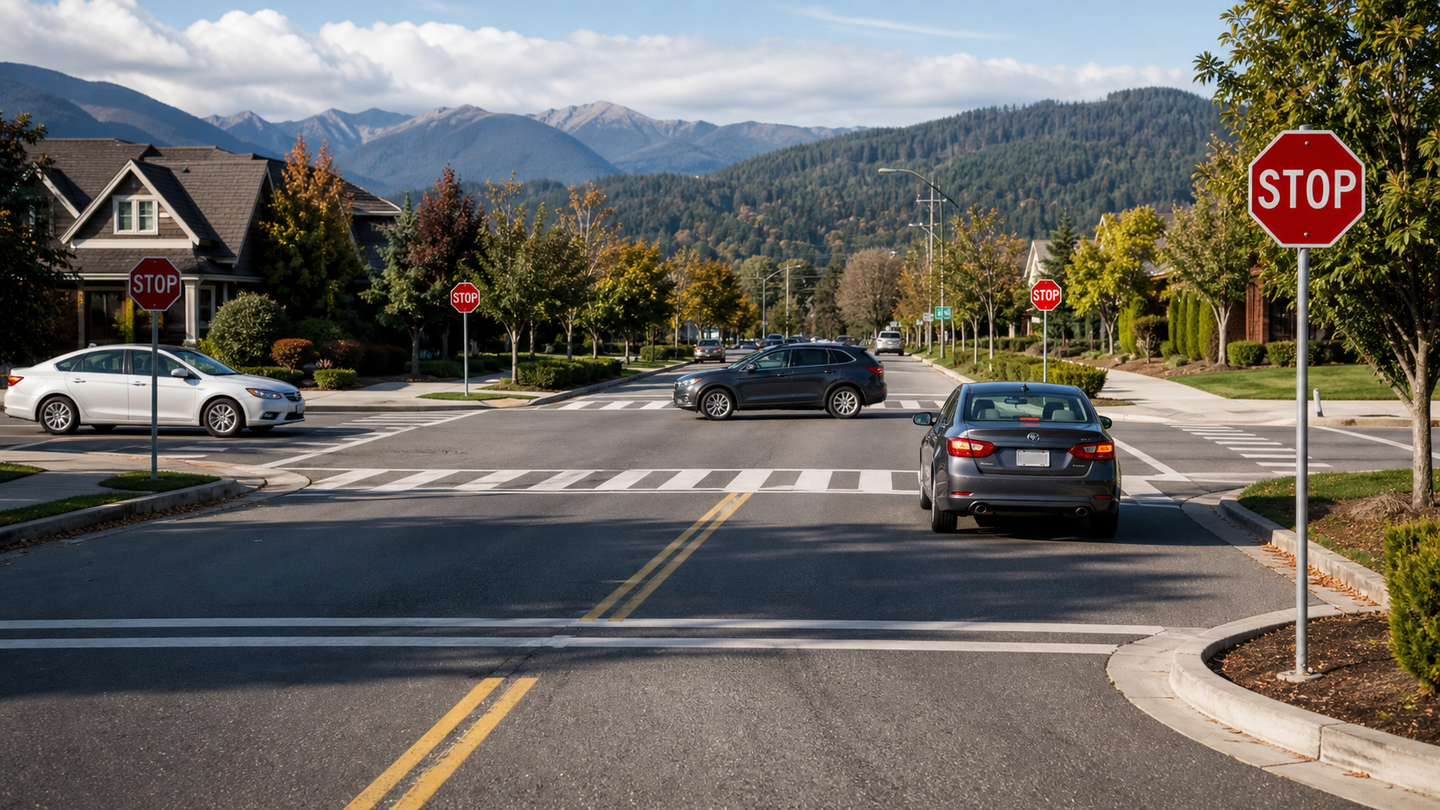
In British Columbia, a four-way stop is usually handled by complete stops, first-arrival priority, yielding to the vehicle on your right when arrival is simultaneous, and yielding to pedestrians, cyclists, and emergency vehicles when required.
Start with a real stop
Before deciding who goes first, every driver must make a complete stop at the stop line, before the crosswalk, or before entering the intersection. Rolling forward while looking for a gap is not the same as stopping, and it can confuse other drivers.
First to stop usually goes first
When vehicles arrive one after another, the vehicle that stopped first normally proceeds first. Watch the wheels and body movement of other vehicles, because the safest choice is to let the clearly established driver continue instead of rushing into a tie.
If it is a tie, yield to the right
When two vehicles stop at about the same time, the driver on the left should yield to the driver on the right. If two vehicles face each other and one is turning left, the left-turning driver should yield to the vehicle going straight or turning right.
People outside cars can change the answer
Pedestrians in or entering the crosswalk, cyclists, school patrols, traffic officers, and emergency vehicles can override the simple vehicle order. Your exam answer and your real driving choice should protect vulnerable road users first.
Quick answers
What if everyone waves at the same time?
Do not rely only on hand signals. Confirm the path is clear, move predictably, and be ready to stop if another road user begins moving.
Does the car on the right always go first?
No. The right-side rule mainly solves simultaneous arrivals. If another vehicle clearly stopped before you, let that vehicle go first.