
Water covers the road in BC: choose another route
A flooded road hides more than its depth. Learn how to pause, check conditions and choose a safer route during a BC practice drive.
Updated:
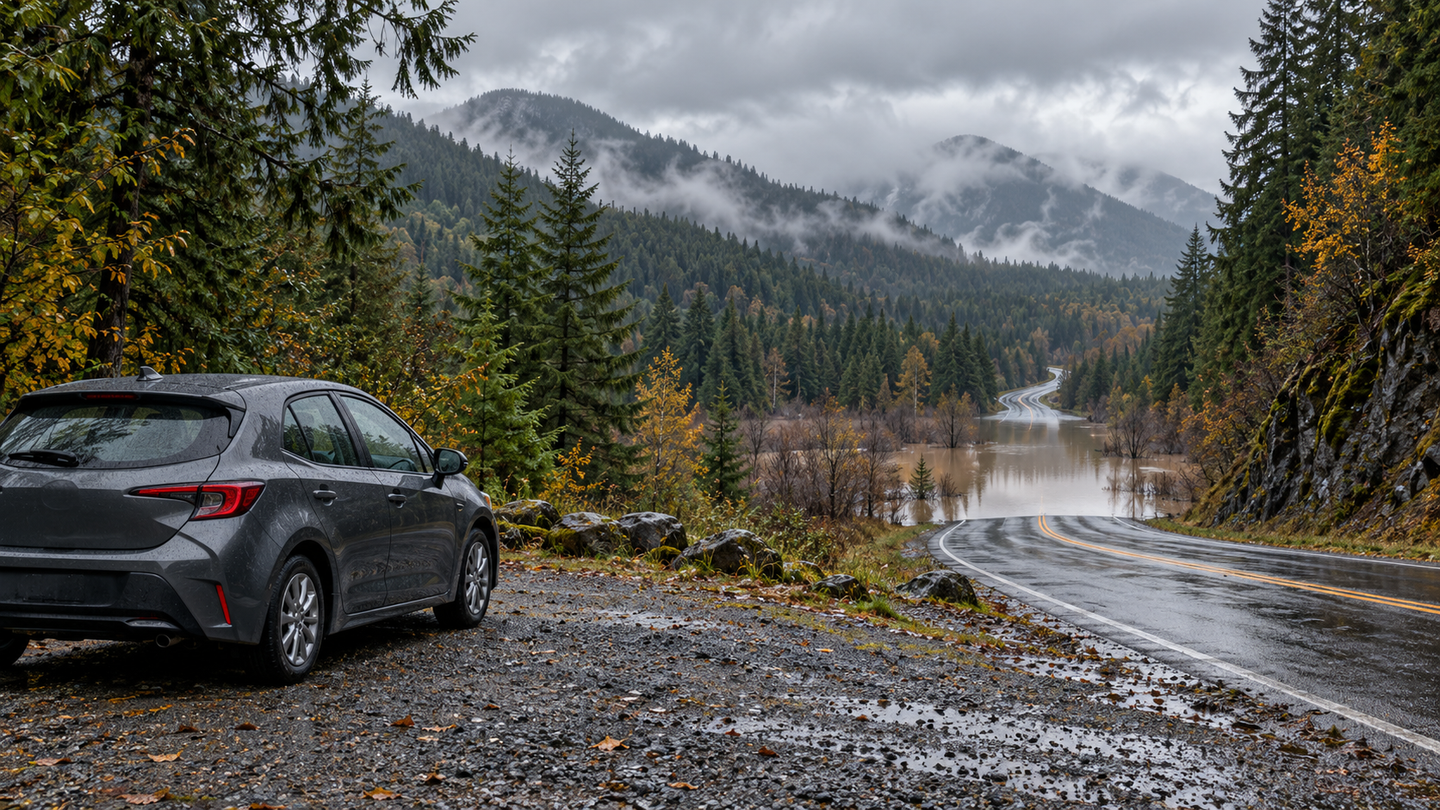
For British Columbia learners, a covered road is a reason to stop the route plan and reassess; checking DriveBC does not make floodwater safe to enter.
Make the decision before the water
On a practice drive, you reach a low section where brown water hides the road. Your appointment is close and another vehicle has crossed. Do not use that vehicle as a depth gauge. Water can conceal damaged pavement and moving debris, and conditions can change. Avoid entering the flooded section; give yourself time and space to choose a safe alternative.
Replan from a safe place
With your supervisor, identify a safe place away from moving traffic and the water. Do not make a sudden turn or reverse into traffic just to escape the route. Once safely parked, check DriveBC and official emergency information. A navigation app suggesting the same road is not evidence that it is open. Follow closures and choose an appropriate alternative or postpone.
Practise the judgment, not a crossing
For ICBC Class 7 study, explain what you cannot know from the driver's seat: water depth, pavement condition and whether the crossing will remain passable. Discuss where you could stop safely before your next practice drive. The useful skill is recognizing an uncertain hazard early, not finding a technique for driving through it.
Quick answers
Can I follow a larger vehicle through the water?
No. Its passage does not establish safe conditions for your vehicle, and the road beneath the water may be damaged.
Does a short detour justify ignoring a closure?
No. Follow official closures. Replan from a safe parking place, or postpone the trip when no suitable route is available.