
Finished practising? Check car security before walking away in BC
A practical end-of-drive routine for BC learners: choose a visible parking place, remove valuables, take the keys and check the locks.
Updated:
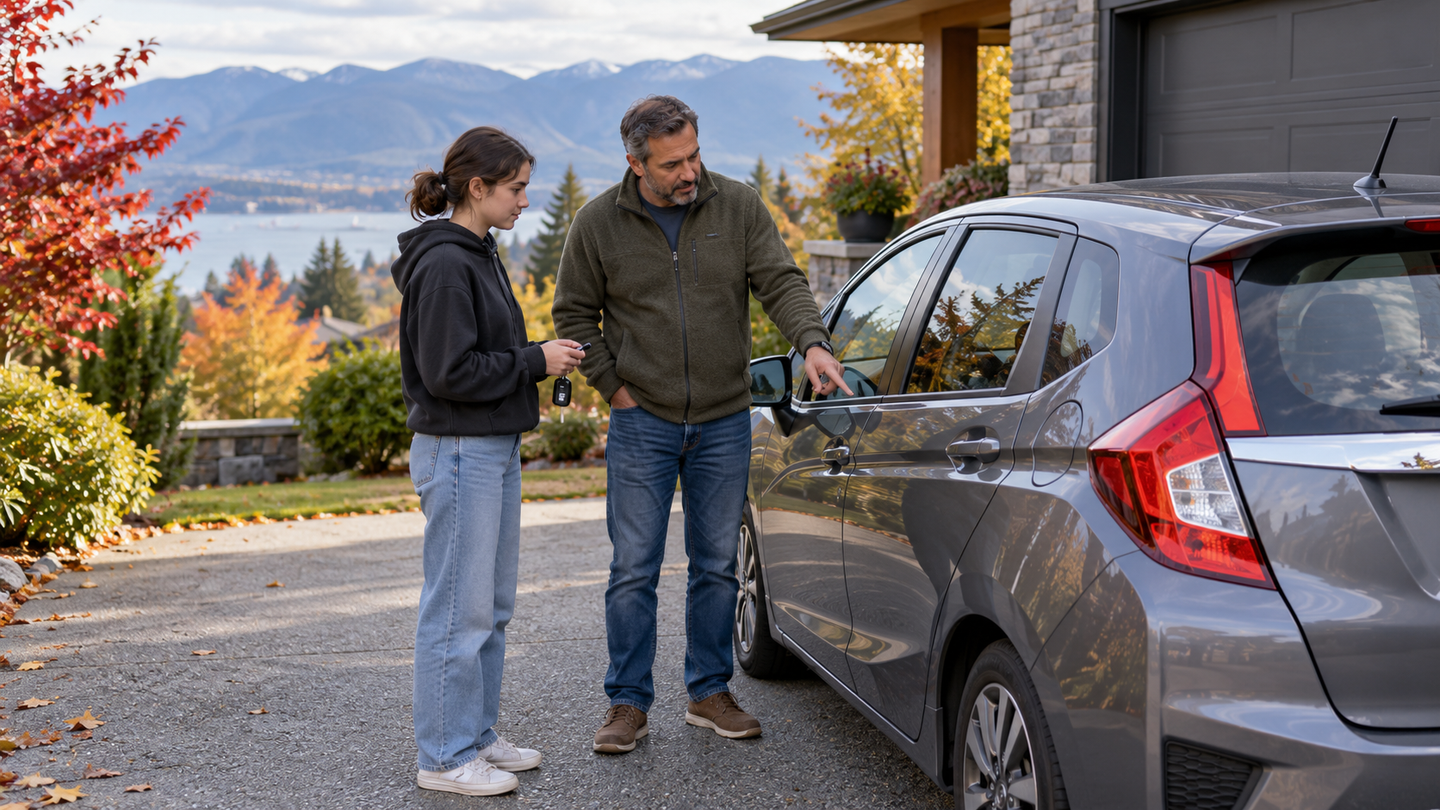
Practical vehicle-security habits for Class 7 learners ending supervised drives in British Columbia.
Finish with a deliberate security check
After parking safely and securing the vehicle, check what you are leaving behind. ICBC recommends a secure, well-lit location, closed windows, locked doors and careful handling of keys. Remove valuables where practical and keep remaining belongings out of view. These habits reduce opportunities for theft; they do not guarantee that a car will be safe.
Scenario: a short stop after your lesson
You and your supervisor stop for a drink after practising. Your backpack is on the rear seat and your phone is in a charging cradle. Before leaving, take both with you, collect the key and check the windows and locks. Do not assume a brief stop is too short to matter. If you use a shared family car, agree who has the key before you both walk away.
Practise the routine without rushing
Choose a parking place where you can see your surroundings and reach your destination safely. Before the next lesson, ask your supervisor to watch your final check rather than remind you at each step. For knowledge-test study, connect this routine with anticipating hazards and taking responsibility for the vehicle. This is a practical study exercise, not a prediction of an ICBC question or a road-test scoring rule.
Quick answers
Should I lock the car for a very short stop?
Yes. ICBC recommends closing windows and locking doors even when you will be away for only a few minutes. Take the keys with you.
Is hiding a spare key inside the car a useful backup?
ICBC advises against storing a spare key in the vehicle. Arrange a secure alternative with the vehicle owner before your practice drive.