
When Should a BC Learner Wait Before Passing a Cyclist?
A practical BC Class 7 guide to following cyclists, choosing a safe passing opportunity, keeping space, and avoiding rushed turns or dooring conflicts.
Updated:
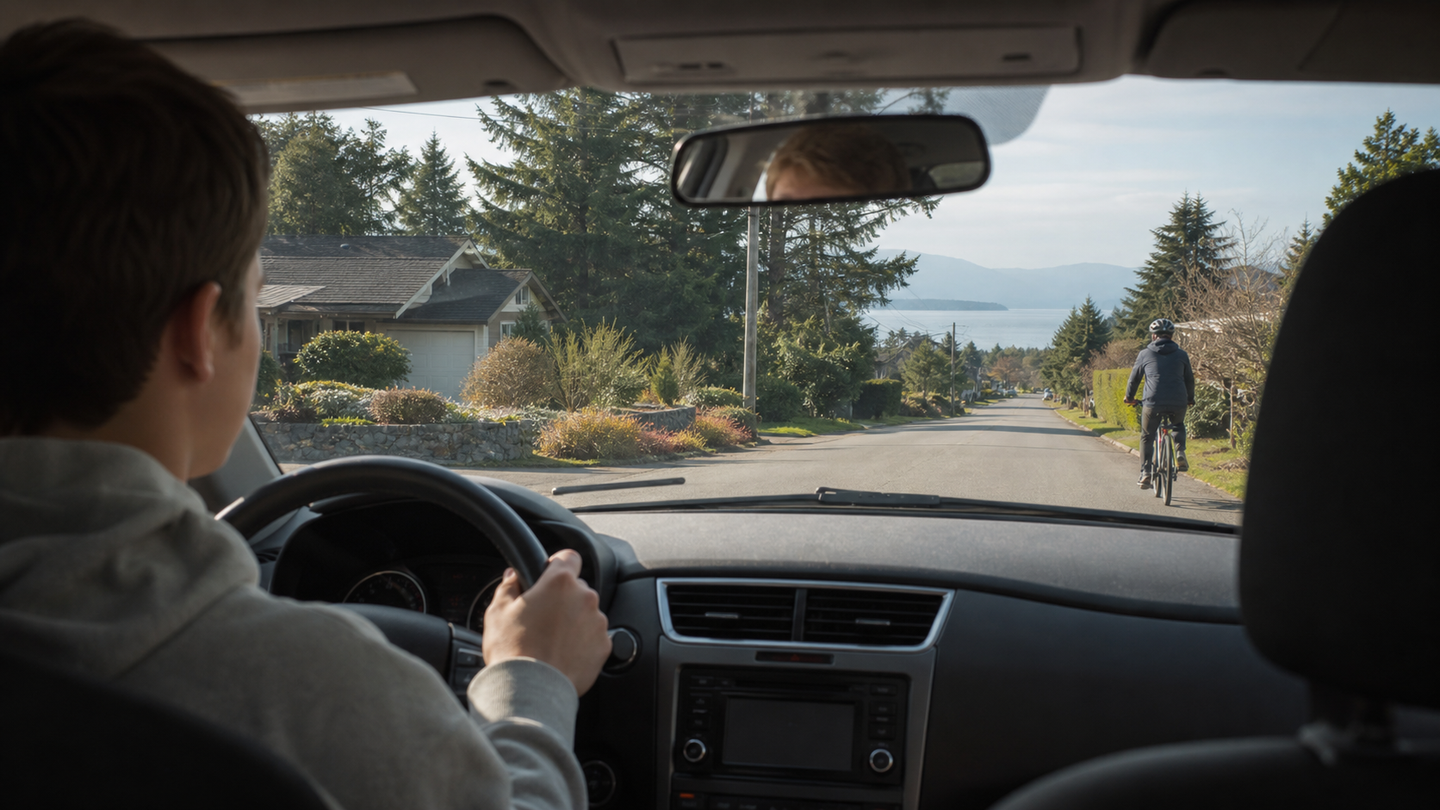
In British Columbia, a learner driver should stay well back from a cyclist, scan for oncoming traffic and roadside hazards, and wait rather than force a close or rushed pass.
Start by staying back
When you catch a cyclist, reduce speed early and leave a generous following gap. The space improves your view around the bicycle, gives the cyclist room to avoid debris or a drain, and prevents your vehicle from feeling like pressure immediately behind them.
Pass only when the whole path works
Check well ahead for oncoming vehicles, curves, hill crests, parked cars, driveways, and narrowing road space. If you cannot move through with a comfortable side margin and return smoothly without cutting in, keep following and wait for a better opportunity.
Expect movement near turns and parked cars
A cyclist may move left to avoid a door, rough pavement, or another hazard that is hard to see from your seat. Before turning, pulling over, or opening a vehicle door, use mirrors and a shoulder check so the cyclist is not hidden beside you.
ICBC knowledge-test takeaway
Choose the answer that creates time and space instead of the answer that completes the pass fastest. For a Class 7 learner, patience, repeated observation, and a predictable path are stronger safety choices than squeezing through an uncertain gap.
Quick answers
Should I pass a cyclist as soon as the centre of the road looks clear?
No. You also need a clear view, enough side space, a safe return path, and no conflict from curves, driveways, parked vehicles, or changing road width. If any part is uncertain, stay back.
Why should I leave extra following distance behind a cyclist?
The extra distance improves visibility and gives both road users time to respond if the cyclist moves around debris, a pothole, a parked vehicle, or another sudden hazard.