
A hedge blocks your view at a BC intersection: what next?
Practise handling an obstructed intersection view: slow early, separate seeing from going, and check again before committing to a turn.
Updated:
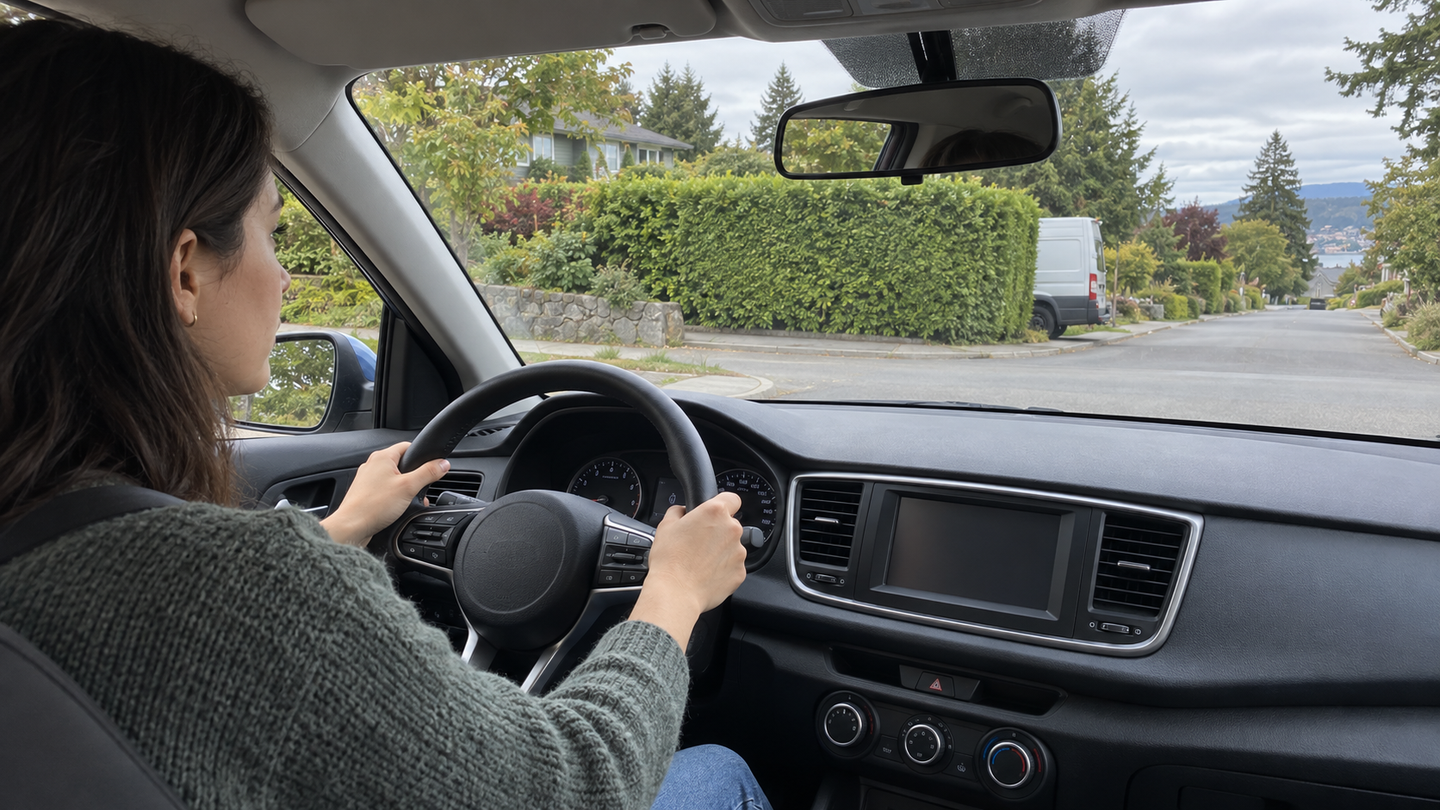
A practical British Columbia Class 7 observation scenario based on ICBC guidance for intersections with obstructed sight lines.
Treat missing information as a hazard
ICBC identifies blocked vision as a hazard. Reduce speed early and check behind before slowing. Obey the intersection's controls; a limited view does not cancel a required stop. Separate two decisions: can you see enough, and is it safe to go?
Practice scenario: a van beside a hedge
You intend to turn, but a parked van hides approaching traffic. After any required stop, look left, centre, right and left again. Move forward slowly only if you can do so safely to improve the view; do not push into someone's path. If you still cannot judge the gap, wait. Recheck pedestrian space and shoulder-check before turning.
Explain your decision during practice
Tell your supervisor what remains hidden and what would change your decision. For an ICBC study scenario, the useful takeaway is to reduce uncertainty before committing. Another driver's wave does not reveal traffic behind the obstruction. Keep scanning as the view changes.
Quick answers
Does stopping once prove the way is clear?
No. A stop and a usable view are separate matters. Look again from a safe position before committing to the turn.
Should I accelerate to get past the obstruction?
No. Gaining a view calls for controlled observation, not rushing into space you have not checked.